
Loading...
Serving Columbia, MO and surrounding areas. (573) 530-1593
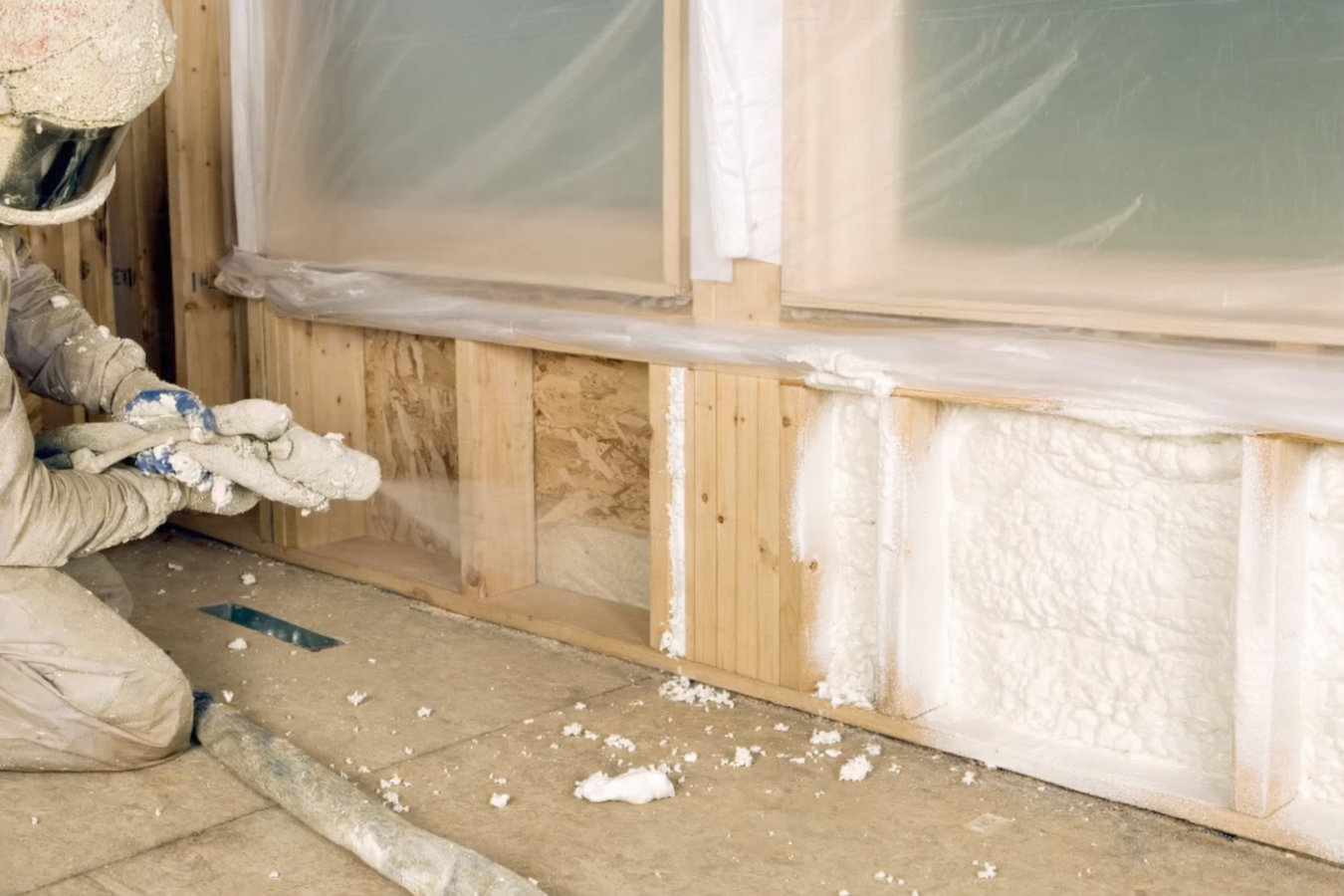
Your home is leaking air through gaps you cannot see. We find every one of them with a blower door test, seal them with foam and caulk, and verify the results so you know the job actually worked.
Air sealing services in Columbia, MO locate and close the gaps, cracks, and openings where outside air enters your home and conditioned air escapes, using foam, caulk, and weatherstripping applied to the highest-impact areas first. Most whole-home jobs are completed in one to two days, with results confirmed by a blower door test before and after.
Columbia's climate zone means your heating and cooling system runs hard for much of the year. If your home is leaking air, that system is fighting a constant losing battle against gaps in your attic floor, rim joists, around windows, and at every penetration through your building envelope. Older homes in Columbia, particularly those built before 1990, were constructed before builders paid much attention to air tightness, and they tend to leak significantly more than newer construction.
Air sealing works best when combined with insulation upgrades. Our attic air sealing service addresses the single highest-impact location in most homes, while a full-house treatment covers every zone where leakage is costing you money.
If your monthly bills feel out of proportion to what neighbors with similar homes pay, air leakage is one of the first things to investigate. Columbia's climate puts your heating and cooling system under real pressure in both summer and winter. A leaky home makes that system work harder all year, and the cost adds up every billing cycle.
Hold your hand near an electrical outlet on an exterior wall on a cold day. If you feel cool air moving through it, that gap goes straight to the outside. The same test applies near baseboards, window frames, and anywhere interior finishes meet exterior walls. These symptoms are especially common in Columbia's older neighborhoods.
If one bedroom is always stuffy in August or freezing in January no matter how you adjust the thermostat, uneven air leakage is often the cause. Rooms at the ends of the house, rooms above garages, and rooms directly under the attic are the most common problem areas. This is a comfort issue that air sealing directly addresses.
Excessive dust is a sign your home is pulling in a lot of outside air, and that air carries particles with it. If you find yourself dusting more often than seems reasonable, or if family members with allergies experience more symptoms at home than elsewhere, air infiltration may be a contributing factor. Columbia's spring pollen season makes this particularly noticeable.
We start every air sealing job with a blower door test. This is the only reliable way to measure how much air a home is leaking and pinpoint exactly where those leaks are. Without that baseline measurement, any contractor is guessing, and you have no way to know whether the work made a real difference. We perform the test before the job starts and again after it is complete so you can see the before-and-after numbers.
The sealing work itself focuses on the highest-impact areas first: the attic floor, where gaps around light fixtures, plumbing, and top plates allow the largest volume of air to escape; the basement rim joists, which are one of the most commonly overlooked leakage sources; and every penetration through the building envelope. For homes that need both air sealing and insulation, we coordinate both scopes so the work is done in the right order. Our basement insulation service, for example, always includes rim joist sealing as part of the scope.
We also flag anything that affects ventilation or indoor air quality. A well-sealed home needs intentional ventilation, not just gaps. If your home is being sealed tightly, we will discuss whether any mechanical ventilation adjustments are needed for your specific situation before we finish the job.
Homes where multiple leakage areas are contributing to high bills and uneven comfort throughout the house.
Homes where the attic floor is the primary leakage source, typically older builds where insulation was added without sealing gaps first.
Homes where the basement perimeter is a significant source of cold-air infiltration in winter and humidity entry in summer.
Homeowners who want a diagnostic baseline before deciding whether to proceed with sealing or insulation work.
Columbia's climate swings from below-freezing winters to hot, humid summers. That range means your home's air barrier is working against you in both directions all year. A home that leaks air in January is also letting in humidity in July, and Columbia's summers are genuinely humid. That moisture can condense inside walls and attic spaces, creating mold and rot conditions over time. Air sealing reduces both the energy cost and the moisture risk.
A large share of Columbia's housing stock, particularly in established neighborhoods near the University of Missouri campus and in Old Southwest and Benton-Stephens, was built before builders gave air tightness any attention. Those homes tend to have far more leakage than newer construction, and the savings from sealing them tend to be larger and faster to realize. Columbia Water and Light, the city's municipal utility, has offered rebates for energy efficiency work in past years. Check with them directly before scheduling work to confirm what is currently available. The federal Inflation Reduction Act tax credit also applies to qualifying air sealing improvements, which you can review at the ENERGY STAR tax credits page.
We serve Columbia and the surrounding mid-Missouri region. If you are in Jefferson City, Sedalia, or Warrensburg, we cover those areas as well. Older homes throughout mid-Missouri share the same air-leakage profile, and our approach is the same wherever we work.
We respond within 1 business day. Tell us the age of your home and what you have noticed: high bills, drafts, uncomfortable rooms. We will schedule an in-home assessment and come prepared with the right equipment.
We perform a blower door test to measure exactly how much air your home is leaking and locate the primary sources. This takes about an hour and gives us the data to write an accurate proposal. You will see the results, not just hear about them.
The crew works systematically through the highest-impact areas, starting in the attic, then the basement or crawl space, and finishing with gaps around windows, doors, and penetrations. Most of the work happens out of sight. The crew protects your belongings and cleans up before leaving.
After sealing, we run a second blower door test to confirm that air leakage has been meaningfully reduced. We walk you through the before-and-after results and provide any documentation needed for utility rebates or federal tax credits.
We will run a blower door test, show you the data, and give you a written proposal before any work begins. No pressure, no commitment.
(573) 530-1593Pre- and post-blower-door testing is how you know the work made a real difference. We include both tests in every air sealing job. You receive the before-and-after numbers so you can see your home's measured improvement, not take our word for it.
Homes built before 1990 in Columbia tend to have leakage patterns we recognize from experience. We know where the gaps typically hide in this city's older ranch homes, bungalows, and two-stories, which means we find and close them faster and more completely than a crew working from a generic checklist.
We work throughout mid-Missouri, covering Columbia and all surrounding service areas including Jefferson City, Fulton, Moberly, and beyond. Local crews, local knowledge, same standards across every job regardless of where you are.
Columbia Water and Light rebates and the federal home energy improvement tax credit both require documentation. We provide what you need to apply. The Building Performance Institute, whose standards guide our approach, publishes best practices for this kind of work at{" "}bpi.org.
Our approach to air sealing is grounded in measurement, not assumption. We do not guess where the gaps are, and we do not sign off on a job we cannot prove. If you want a contractor who will show you the data before and after, call us and we will start with a blower door test.
Rim joists and basement walls are among the leakiest spots in most Columbia homes. Sealing and insulating them together delivers the biggest gain.
Learn moreThe attic floor is the single most impactful place to seal in most homes. Our dedicated attic air sealing service focuses exclusively on those top-plate gaps.
Learn moreCall or submit a request today and we will respond within 1 business day. A blower door test is the first step, and it costs you nothing to find out what your home is leaking.