
Loading...
Serving Columbia, MO and surrounding areas. (573) 530-1593
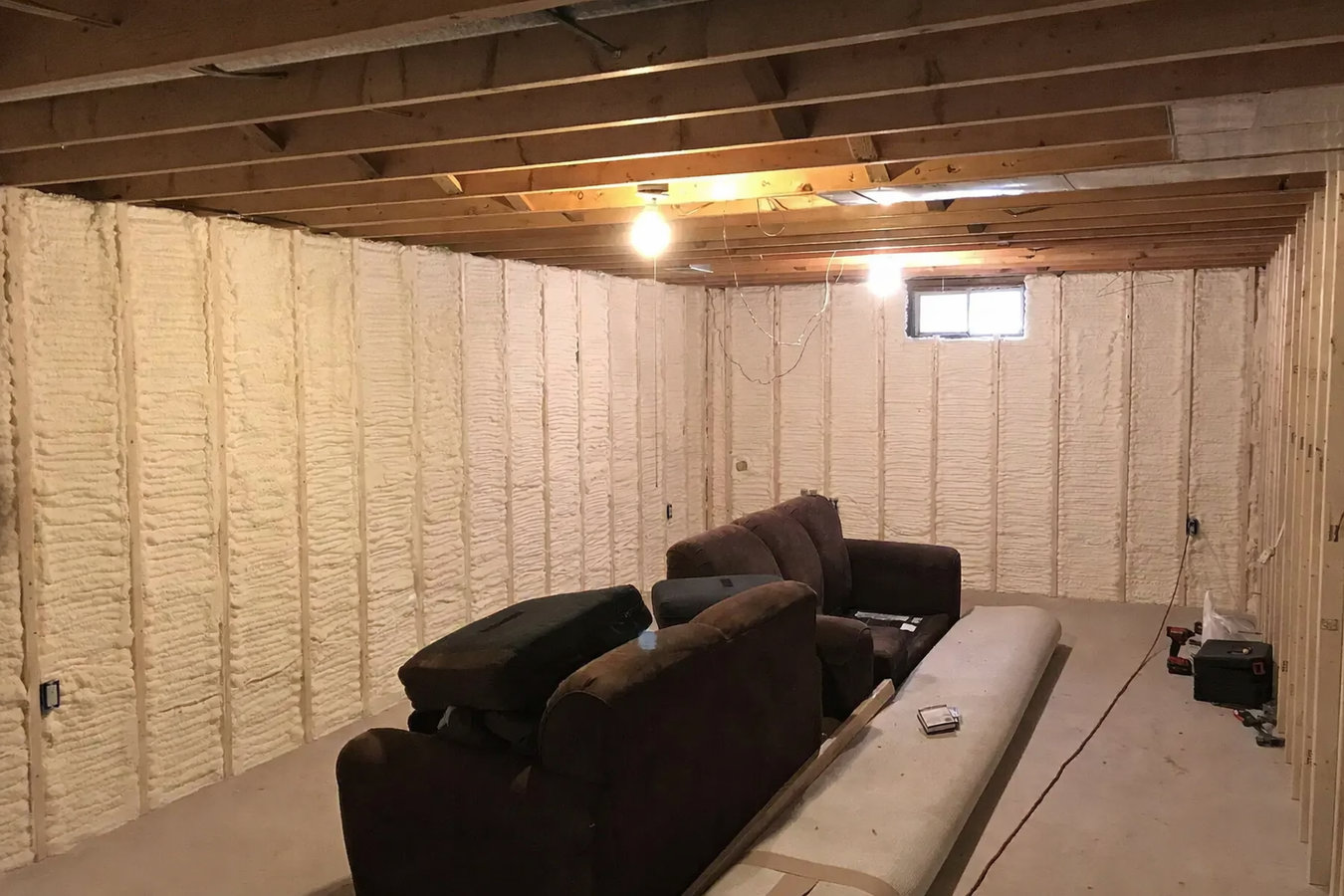
An uninsulated basement is one of the biggest sources of heat loss in a Columbia home. We seal the gaps, insulate the walls, and protect your plumbing before the next cold snap hits.
Basement insulation in Columbia, MO creates a thermal barrier along your foundation walls and ceiling that slows heat from escaping into the ground each winter - most jobs are completed in one to two days, with minimal disruption to your household routine.
Columbia sits in a climate zone where winters push temperatures into the teens and summers bring sustained heat and humidity. Homes built before the 1980s, especially in older neighborhoods near the University of Missouri campus and Old Southwest, often have little to no basement insulation and significant air leakage around the rim joist. Those gaps account for more heat loss than most homeowners realize.
Basement insulation also protects your plumbing. Pipes that run through an uninsulated basement are vulnerable during Columbia cold snaps, and a frozen pipe is a far more expensive problem than the insulation that prevents it. If your basement floors are damp as well as cold, pair this service with our crawl space insulation assessment to address the full foundation envelope.
If your energy costs jump significantly from October through February and your furnace runs constantly, your basement is a likely culprit. Columbia winters regularly push temperatures into the teens and single digits, and an uninsulated foundation accounts for a large share of your home's heat loss. If the rooms above your basement feel noticeably colder than the rest of the house, that is a strong signal.
Stand on your first floor in socks on a cold January morning. If the floor feels noticeably cold near exterior walls, heat is escaping through your basement ceiling and foundation. This is especially common in Columbia's older neighborhoods, where homes were built without the rim joist sealing and insulation that modern construction includes as standard.
White mineral stains on concrete walls, called efflorescence, are a sign that water is moving through your foundation. Damp patches or a musty smell are similar warnings. These do not mean you cannot insulate, but they do mean moisture needs to be addressed first. Columbia's clay soils hold water against foundations longer than sandy soils do, making this a more common issue here.
If you had a pipe freeze or come close to freezing during a Columbia cold snap, your basement is not retaining enough heat. Pipes freeze when the space around them drops below 32 degrees, which can happen in an uninsulated basement during a Missouri cold spell. Proper wall insulation keeps the basement temperature stable enough to protect your plumbing through even a hard winter.
Columbia Insulation installs basement insulation using the material that fits your basement's layout, moisture history, and how you use the space. The two main approaches are wall insulation and ceiling insulation. Wall insulation keeps the entire basement warmer, protects pipes, and is the better choice when you use the basement as living or storage space. Ceiling insulation - the floor above the basement - is less expensive and simpler, but it leaves the basement cold, which can still cause pipe problems during a hard mid-Missouri winter.
Material choices include spray foam, rigid foam board, and batt insulation. Spray foam seals air gaps and insulates in one step, making it well-suited for rim joists and irregular framing. Our closed-cell foam insulation service is particularly effective for basement walls because it resists moisture vapor rather than absorbing it. Rigid foam board and batt insulation are good options for open wall runs where moisture is not a primary concern.
Before any material goes in, we check for existing moisture problems. Insulating over an active leak makes the problem worse. If we find signs of water intrusion, we will tell you upfront and explain what needs to happen before installation. We also air-seal the rim joist as part of every basement project, because that band of framing is one of the most common sources of cold air infiltration in Columbia homes.
Homeowners who use the basement as living or storage space and want to keep the entire space warm through winter.
Homeowners focused on keeping the first floor warmer at a lower upfront cost, when pipes are not running through the basement.
Any home with a basement, since the rim joist is one of the most consistently overlooked sources of heat loss and cold air infiltration.
Homes with clay soil pressure, damp walls, or a history of water seepage where moisture-resistant materials are essential.
Columbia's climate works in both directions. Cold winters and hot, humid summers mean your basement insulation has to perform year-round - keeping heat in from November through March and resisting moisture from June through August. Homes built in the 1950s through 1970s, which make up a large portion of Columbia's residential neighborhoods including those near the MU campus and Old Southwest, were constructed before modern insulation standards. Many have no basement wall insulation at all and only partial coverage on the rim joist.
Columbia's clay-heavy soils add another variable. Clay holds moisture against foundation walls and shifts with the seasons, putting ongoing pressure on basement walls. That movement can create cracks and allow water to push through concrete over time. The University of Missouri Extension documents this soil behavior as a common source of foundation moisture in central Missouri. We factor that in before recommending a material.
We serve Columbia and surrounding mid-Missouri communities, including Sedalia, Rolla, and Jefferson City. Older homes throughout this region share similar construction characteristics, and we know what those basements typically need.
We respond within 1 business day and schedule an in-home assessment. There is no cost to the estimate and no obligation. Describe what you are noticing - cold floors, high bills, frozen pipes - and we will come prepared.
We walk through your basement and inspect the walls, ceiling, rim joist, and any existing insulation. We check for moisture signs - efflorescence, damp patches, soft spots - and explain what we find before quoting a price. The visit typically takes 30 to 60 minutes.
Before the crew arrives, move stored items away from the walls. Your contractor will tell you exactly how much clearance is needed. This is the main thing homeowners do to prepare, and it makes a real difference in how smoothly installation day goes.
Most jobs are completed in one day, sometimes two for larger homes. The crew seals air gaps first, then installs the insulation. When the work is done, we walk you through the finished job, show you what was installed and where, and answer questions before we leave.
Free estimate. No pressure. We assess your basement, tell you what we find, and quote in writing - you decide what to do next.
(573) 530-1593We check for signs of water intrusion before recommending any material. Columbia's clay soils and older housing stock mean moisture issues are common here, and insulating over a wet wall makes the problem worse. You get an honest assessment, not a material recommendation that ignores what your basement is actually doing.
The City of Columbia Building and Site Development office oversees permits for residential work. We know which basement insulation projects require a permit in Columbia and handle the paperwork on your behalf. A permit protects you legally and provides documentation that the work meets local standards if you sell the home. You can verify permit requirements directly at the city's Building and Site Development office.
We have worked on homes throughout Columbia's neighborhoods, from the brick ranch homes near the MU campus to the newer subdivisions in south Columbia. That local experience matters when the framing, moisture history, and soil conditions vary this much across a single city.
The rim joist - where your floor framing meets the foundation wall - is one of the most consistently overlooked sources of heat loss in Columbia homes. We seal it as part of every basement insulation project, not as an add-on. Skipping this step is one of the most common reasons homeowners do not feel the improvement they expected.
Every basement is different, and the right approach depends on how you use the space, what moisture conditions exist, and what your heating goals are. We give you a straight answer before the work starts and a complete walkthrough when it is done. Call (573) 530-1593 or submit an estimate request to get started.
For permit requirements specific to your project, the City of Columbia Building and Site Development office can confirm what applies. The Insulation Contractors Association of America publishes installation standards for residential projects.
Closed-cell spray foam is the most moisture-resistant material for basement walls, combining air sealing and insulation in a single application.
Learn moreIf your home has a crawl space rather than a basement, this service covers the insulation and moisture control options that apply to that space.
Learn moreColumbia winters come fast - lock in your installation date before the cold sets in and the schedule fills up. Call or request a free written estimate now.