
Loading...
Serving Columbia, MO and surrounding areas. (573) 530-1593
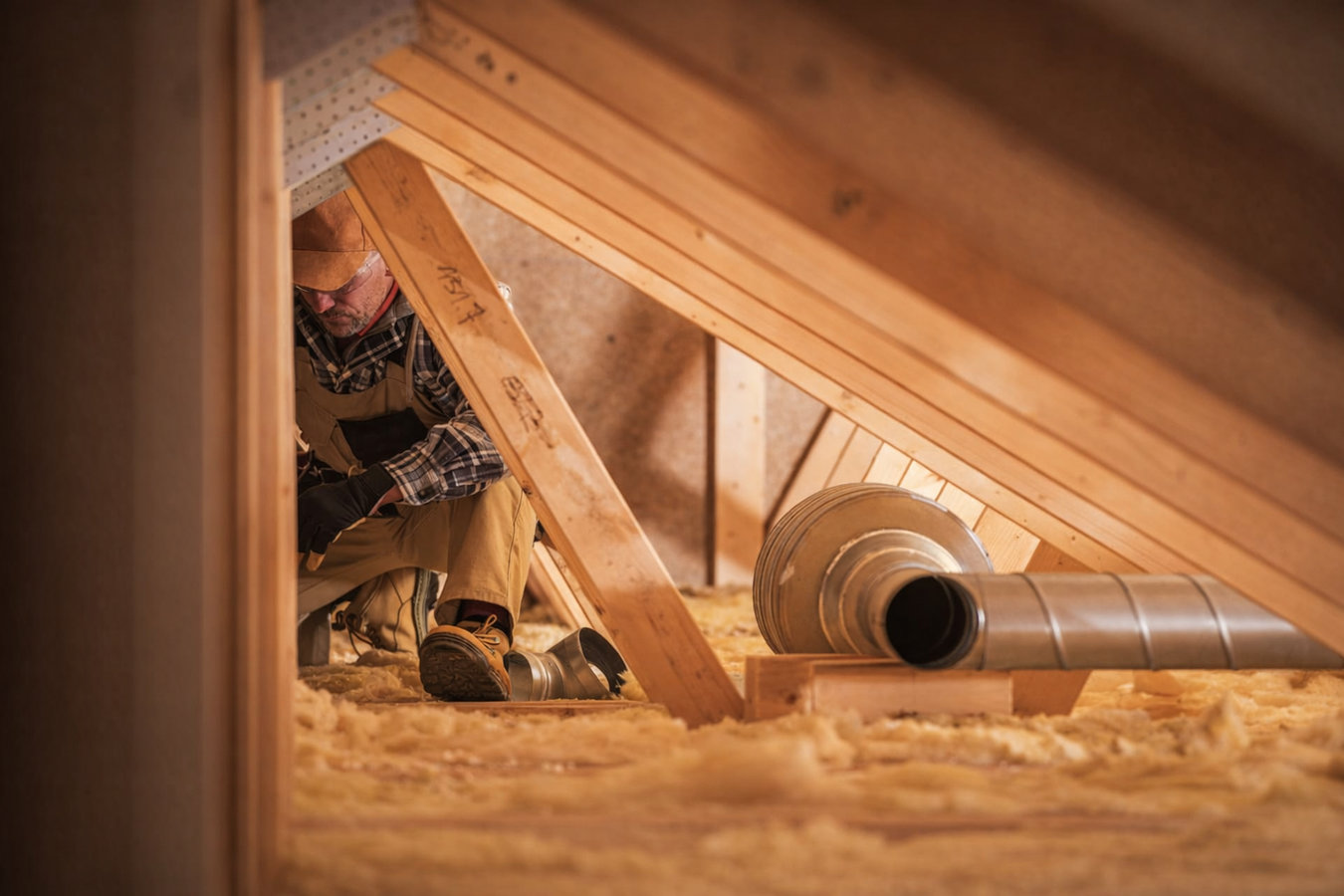
Columbia Insulation provides home insulation, attic upgrades, and crawl space services to Warrensburg homeowners and property owners throughout Johnson County. We are locally owned, offer free estimates, and return every inquiry within one business day — whether your home is a brick ranch near downtown or a newer subdivision on the north side of town.
Warrensburg has a wide range of housing types, from older brick homes near the downtown square and the UCM campus to mid-century ranch homes and newer subdivisions on the north and east sides of town. Each type of home has different insulation needs, and a plan that treats them the same will underperform in all of them. Our home insulation services address each area of the building envelope separately, starting with wherever the heat loss is greatest.
Warrensburg winters regularly drop below 20 degrees Fahrenheit, and the attic is where the largest share of heat escapes in most homes. Many ranch-style homes in the 1950s and 1960s neighborhoods have original insulation that has compressed to well below the current minimum for Missouri. Upgrading attic insulation is the single most cost-effective improvement for Warrensburg homeowners dealing with high heating bills.
Johnson County sits on clay-heavy soil that holds moisture and releases it slowly upward through crawl space floors. Homes that have never had crawl space insulation or vapor control installed are taking on ground moisture every wet season, which feeds wood rot and mold in the floor system above. Properly insulated crawl spaces protect the structure and keep floors warmer in winter.
The older homes near the UCM campus and downtown Warrensburg frequently have attics with irregular framing, low clearance, and obstructions that make standard batt installation impractical. Blown-in cellulose fills these spaces evenly, including corners and spaces around framing members, without leaving the gaps that batt insulation creates in complex attic layouts.
Homes in Warrensburg near Grover Creek and other low-lying drainage channels are particularly vulnerable to ground moisture in spring and during heavy rain events. A heavy-duty vapor barrier installed at the crawl space floor, combined with proper wall insulation, creates a durable moisture-control system that prevents the cycle of dampness, wood degradation, and air quality problems common in unmanaged crawl spaces.
Warrensburg homes from any era accumulate air leakage paths over time, but older homes near downtown have the most: gaps at the tops of partition walls, open plumbing chases, and unsealed attic access hatches are common in pre-1960 construction. Adding insulation without sealing those gaps first means conditioned air escapes directly past the insulation. Air sealing first ensures every dollar of insulation investment is working as intended.
Warrensburg averages around 17 inches of snow per year and sees temperatures that drop hard enough in January and February to freeze the ground solid. That kind of cold — combined with summer humidity that pushes July highs toward 90 degrees — means insulation in Warrensburg has to work year-round. The same attic upgrade that keeps heat inside in winter blocks radiant heat from baking down through the ceiling in summer. Both problems come from the same gap in the building envelope.
The housing stock in Warrensburg reflects its history as a college town and a market town serving Johnson County. Homes built near the University of Central Missouri campus date back to the 1890s through the 1940s and have been converted to rentals in many cases, which means deferred maintenance is common. Mid-century ranch homes on the outer streets are now 50 to 70 years old. Newer subdivisions on the north side are owner-occupied and well-maintained but still benefit from energy upgrades.
Johnson County sits on clay-heavy soil that expands when wet and shrinks when it dries. That seasonal movement creates ongoing stress on foundation walls and concrete slabs and allows ground moisture to migrate upward into crawl spaces during wet periods. Spring flooding near Grover Creek and other drainage channels sends water toward foundations in low-lying neighborhoods. Insulation decisions in Warrensburg need to account for this moisture environment, not just the temperature.
Columbia Insulation works regularly in Warrensburg, and our crews are familiar with the full range of housing types throughout Johnson County. The crew encounters pre-war brick homes near the downtown square and the older residential blocks around the UCM campus most often, followed by mid-century ranch homes in the established neighborhoods to the south and west. We coordinate permit requirements through the City of Warrensburg building department and handle that process on behalf of the homeowner.
Warrensburg is the Johnson County seat and sits along US-50 midway between Kansas City and Columbia. Whiteman Air Force Base, located about 20 miles east near Knob Noster, brings a steady flow of military families to Warrensburg who need contractors they can count on quickly, especially for transitions between tours. We understand the timeline pressure that comes with a military household move and schedule accordingly.
We serve Warrensburg as part of our broader mid-Missouri coverage area. Sedalia, about 25 miles west on US-50, is a nearby area we also serve regularly, and homeowners there face similar clay soil and housing age challenges. We are also available for jobs in Jefferson City and the surrounding communities when scheduling allows.
Reach us by phone or through the contact form. We respond to every Warrensburg inquiry within one business day, typically sooner. No pressure, no sales pitch on the first call.
We visit your Warrensburg home, inspect the attic, crawl space, and any other areas of concern, and measure the existing insulation levels. You get a written estimate with specific recommendations before any decision is required.
Once you approve the estimate, we schedule the installation at a time that works for you. Most attic and crawl space jobs in Warrensburg are completed in a single day. We handle all cleanup and leave the space in better condition than we found it.
After installation, we walk through the work with you and answer any questions. If any issues arise after the job is done, contact us and we will address them promptly. Warrensburg homeowners are not handed off to a call center.
We serve all of Warrensburg and Johnson County. Get a free on-site assessment — no commitment required.
(573) 530-1593Warrensburg is the county seat of Johnson County, Missouri, with a population of roughly 20,000. The city's character is shaped by two major institutions: the University of Central Missouri, which has been part of the community since 1871, and Whiteman Air Force Base about 20 miles to the east. The combination gives Warrensburg a stable economy and a housing market that includes long-term homeowners, faculty and staff households, and a rotating population of military families. The Old Drum statue on the courthouse lawn represents one of the city's most distinctive pieces of local history, commemorating the famous 1870 court case that produced one of the most-quoted speeches in American legal history.
The neighborhoods closest to the UCM campus and the historic downtown square include some of the city's oldest homes, many built between the 1890s and the 1940s with brick or wood-frame construction. These blocks are predominantly renter-occupied today, reflecting the university's housing demand. Moving outward from downtown, mid-century ranch homes on modest lots fill the established residential neighborhoods. The north and east sides of town have grown with newer subdivisions over the past 20 to 30 years, bringing owner-occupied homes on larger lots.
Warrensburg sits along US-50, roughly 50 miles east of Kansas City and 55 miles west of Columbia. That central location between two larger markets means it has more retail and service capacity than many Johnson County communities its size. Nearby, Sedalia is about 25 miles west on US-50 and is another community we serve regularly with similar housing stock and climate conditions.
High-performance foam that seals and insulates in a single application.
Learn moreDense, moisture-resistant foam ideal for walls, roofs, and crawl spaces.
Learn moreBlock ground moisture from entering your home through the crawl space.
Learn moreProfessional vapor barrier installation to control moisture in any space.
Learn moreCommercial-grade insulation for offices, warehouses, and retail spaces.
Learn moreServing these cities and communities.
If your home is losing heat this winter or dealing with crawl space moisture, now is the right time to get a free assessment. We respond within one business day.