
Loading...
Serving Columbia, MO and surrounding areas. (573) 530-1593
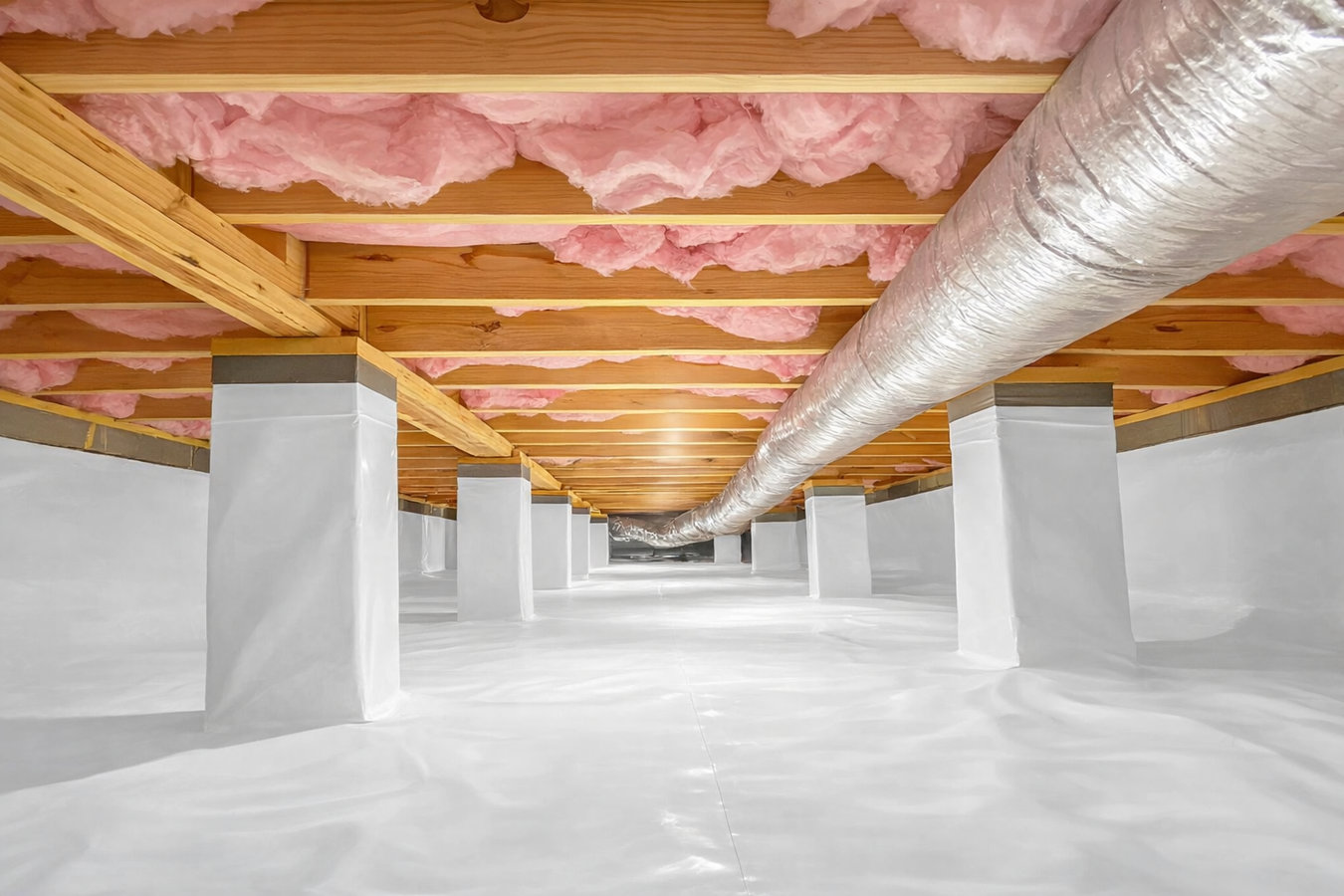
Cold floors and musty smells usually start under your home, not inside it. We insulate your crawl space and seal out ground moisture so your whole house performs better.
Crawl space insulation in Columbia, MO blocks heat loss through your floors and keeps ground moisture from rising into your living space. Most standard installation projects are completed in one to two days, with no need to leave your home during the work.
If your floors feel cold in January despite the thermostat being set where you want it, or if you notice a damp, earthy smell in rooms near the ground floor, the crawl space is usually where those problems start. Columbia's clay soils hold moisture close to the surface year-round, and a crawl space without a proper vapor barrier gives that moisture a direct path up into your home's framing and floors.
Many Columbia homes, particularly those built before the 1980s in older neighborhoods near the university, were never properly insulated below the floor. Our crawl space vapor barrier service pairs with insulation to address moisture at the source, not just slow it down.
If you walk across your kitchen or living room floor in January and it feels noticeably cold underfoot, especially near exterior walls, that is a strong sign that cold air is moving up from an uninsulated or poorly insulated crawl space. Columbia winters regularly bring stretches of temperatures in the 20s and below, and without insulation between the ground and your floor, that cold has a direct path in.
Columbia's clay soils and humid summers mean crawl spaces here are prone to holding moisture. If you notice a damp, earthy, or musty smell, especially in rooms closest to the ground floor, that odor is often coming from below. It can mean moisture is sitting in your crawl space and moving up into your living area, a sign that the vapor barrier is missing, damaged, or overwhelmed.
If you open your crawl space access panel and shine a flashlight inside, you should see insulation that is snug against the floor joists above with no gaps or sections hanging down. Insulation that is sagging, stained, or missing entirely is no longer doing its job. In Columbia's humid climate, staining often means moisture damage or mold has already started.
Homes built before the mid-1980s in Columbia were typically built without the insulation standards common today. If you have lived in your home for years without ever having the crawl space inspected or insulated, the original insulation, if any was installed, has very likely degraded significantly. This is especially true in older Columbia neighborhoods where homes have changed hands multiple times.
Columbia Insulation offers two main approaches to crawl space insulation, and which one is right for your home depends on what your crawl space looks like and what problems you are trying to solve. The first is floor joist insulation, where we install insulation material between the wooden beams directly under your floor. This approach slows heat loss and is appropriate for crawl spaces that are in reasonable condition and properly vented. Our wall insulation service is a common complement for homeowners who want to address heat loss throughout the home's envelope at the same time.
The second approach is full crawl space encapsulation, where we seal the entire space with a heavy-duty vapor barrier on the ground and walls and treat the crawl space as part of your home's conditioned envelope. In Columbia, where clay soils stay damp and ground moisture is a year-round concern, encapsulation tends to perform better over the long term. It costs more upfront, but it addresses moisture at the source rather than just slowing its effects.
Before any installation begins, we inspect the space and remove any old, damaged material. We do not install over wet, moldy, or pest-contaminated insulation. If old material needs to come out first, that is part of the scope we discuss before the job starts.
Homes with a properly vented crawl space in reasonable condition, where the primary goal is reducing heat loss through the floor during Columbia winters.
Homes with persistent moisture problems, musty odors, or unvented crawl spaces where a complete seal is the more effective long-term solution.
Homes where the floor insulation is still serviceable but there is no barrier between the soil and the crawl space, allowing ground moisture to rise unchecked.
Homes where existing crawl space insulation has sagged, degraded from moisture, or been compromised by pests and needs to be cleared out before new material goes in.
Columbia sits in a humid continental climate that puts crawl spaces under pressure from multiple directions. Hot, humid summers push moisture into any unsealed space, while winters bring enough cold to make uninsulated floors feel like standing on a slab. Much of Columbia's housing stock was built in the 1940s through 1970s, when crawl space insulation was rarely part of the original construction. Homes from that era in neighborhoods like Old Southwest and Benton-Stephens are often working with either no crawl space insulation at all or original material that has degraded beyond usefulness.
Columbia's clay-heavy soils add another layer of difficulty. Clay absorbs water slowly and releases it slowly, which means the ground under your crawl space stays damp longer after a rain event than it would in sandier soil. That persistent ground moisture is one of the main reasons the U.S. Department of Energy recommends vapor barriers as a standard part of crawl space insulation in humid climates like mid-Missouri's. A vapor barrier is not optional here; it is what keeps the insulation performing after the first rain season.
We serve Columbia and the surrounding mid-Missouri area. Homeowners in Fulton, Jefferson City, and Moberly face the same clay soil and climate conditions, and we handle crawl space work throughout the region.
We respond within 1 business day. Describe what you are noticing, whether that is cold floors, a musty smell, or visible damage you spotted with a flashlight. You do not need to have all the answers, just give us the starting picture.
A contractor physically inspects your crawl space before quoting. We check the current insulation condition, look for moisture or mold, assess the vapor barrier situation, and measure the space. This visit usually takes 30 to 60 minutes.
You receive a written estimate breaking down what will be done, what materials are being used, and the total cost. If a permit is required for your scope, we tell you upfront. There is no pressure to decide on the spot.
The crew removes any old material, installs the vapor barrier, and adds new insulation per the plan. Most jobs are done in a single day. Before leaving, the contractor walks you through what was done, ideally with photos if you prefer not to enter the space yourself.
We inspect your crawl space in person before quoting. You get a written estimate, a straight answer about what your space needs, and no pressure to decide on the spot.
(573) 530-1593Crawl space conditions in Columbia range from dry and clean to moisture-damaged and pest-impacted, and the price difference is significant. We physically inspect your crawl space before giving you a number. That means no surprises when the crew shows up and no upcharges mid-job for things we should have caught during the estimate.
Installing insulation over a moisture problem does not fix the moisture problem. We assess your vapor barrier situation as part of every crawl space job and address both issues together when needed. The Building Performance Institute, a nationally recognized trade body, notes that moisture control and insulation must be coordinated to produce lasting results. See their guidance at bpi.org.
We have worked on crawl spaces across Columbia and the surrounding region, from newer south Columbia subdivisions to 1950s brick ranches near campus. Columbia's clay soils and housing ages are familiar territory for us, not a variable we are figuring out on your job.
Every estimate breaks down what materials are being used, what work is included, and what the total cost covers. You will not receive a single-line quote for a job this involved. If a permit applies to your project scope, we tell you before the job starts so you are not caught off guard.
Crawl space work is one of those jobs that most homeowners never see after it is done. That is exactly why the quality of what goes in matters. When it is done right, you notice it through warmer floors, a home that smells clean, and energy bills that stop climbing without explanation.
Once your crawl space is addressed, wall insulation is often the next area where Columbia homes lose meaningful heat in winter and gain it in summer.
Learn moreA standalone vapor barrier installation addresses ground moisture in crawl spaces where the insulation itself is in acceptable condition.
Learn moreColumbia's wet spring season and cold winters create real problems for uninsulated crawl spaces. Get ahead of it now with a free in-person assessment and written estimate.