
Loading...
Serving Columbia, MO and surrounding areas. (573) 530-1593
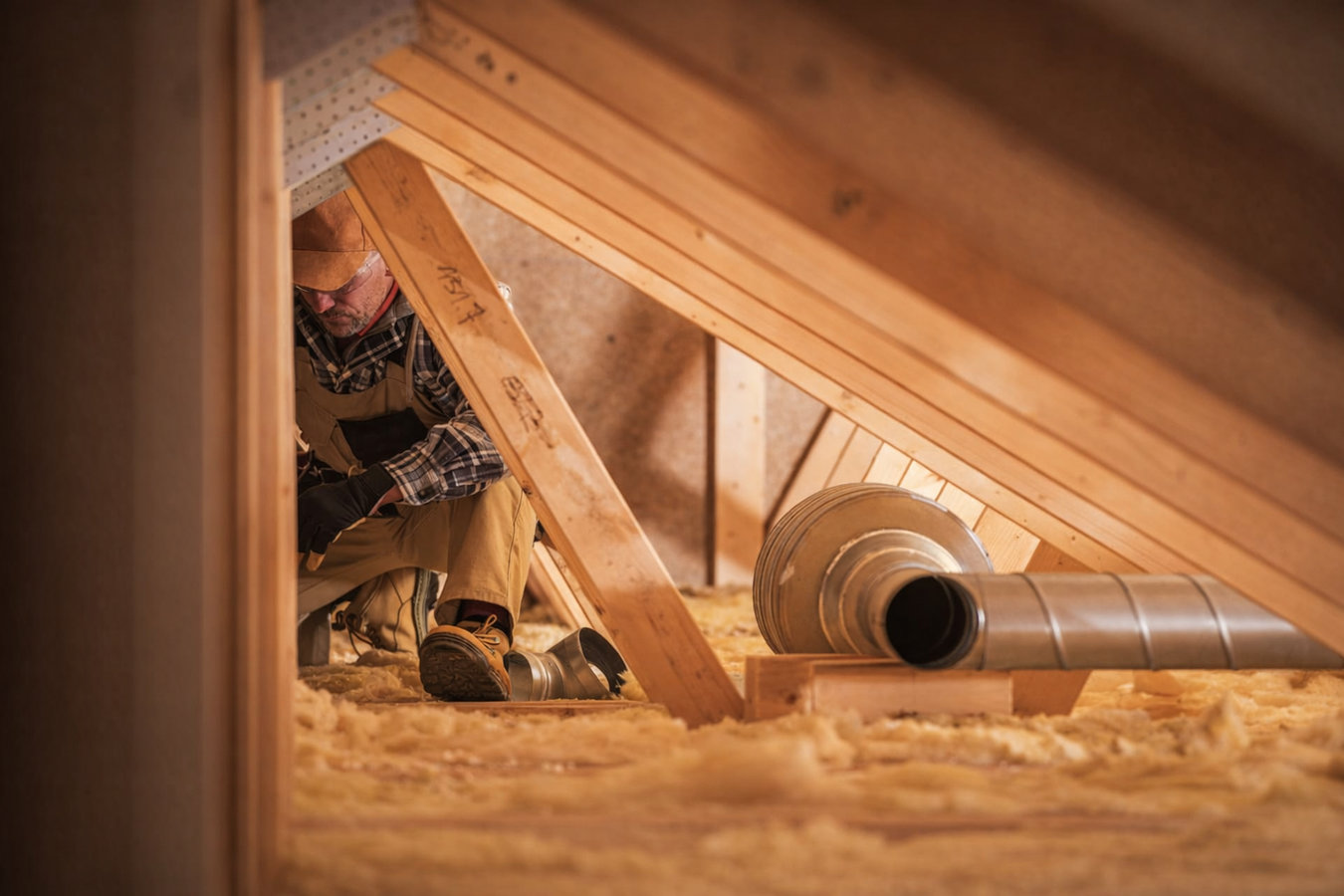
Columbia Insulation covers your full home, attic to crawl space. We tell you exactly what is wrong, what it will cost, and why, before any work begins.
In Columbia, MO, home insulation covers every area where your home loses heat or gains it unwanted: attic, walls, floors over unheated spaces, and crawl spaces. Most projects start and finish in one to two days, though whole-home jobs with air sealing throughout take longer.
Columbia grew substantially in the 1960s through 1980s, and many homes from that era were built to energy standards far below what is recommended today. If your home is more than 35 years old and the insulation has never been assessed, there is a reasonable chance you are overpaying to heat and cool it every single month. The attic is the single biggest source of heat loss in most houses, but walls, floors over garages, and unsealed penetrations all contribute.
A complete assessment includes checking for moisture, pests, and older materials before recommending any work. Homes where existing insulation needs to come out first are covered under our insulation removal service, which can be combined with a full reinstallation in one project.
If your energy bills have risen noticeably over the past few winters or summers without a change in your habits, insulation is one of the first things worth checking. Columbia's temperature swings are significant enough that a well-insulated home and a poorly insulated one can have annual energy costs that differ by hundreds of dollars. If your neighbors in similar-sized homes are paying noticeably less, that is worth paying attention to.
If one part of your home never gets comfortable no matter how long the heat or air runs, that is often a sign of missing or inadequate insulation. In Columbia's older neighborhoods, it is common to find homes where additions or finished rooms were never properly insulated when they were built. This is one of the most reliably solved problems after a proper assessment and installation.
If you look into your attic and the wooden framing members are visible above the insulation line, you almost certainly do not have enough coverage. In Columbia's climate, insulation in the attic should be deep enough that the framing is completely buried. If you can see the wood, heat is escaping through those exposed areas every day your heating or cooling runs.
Given how much of Columbia's housing stock dates from the 1960s through 1980s, this is a very common situation. Insulation standards have changed significantly since then, and what was installed originally may have settled, been disturbed by pest activity, or simply never been adequate by today's standards. If you do not know when your insulation was last assessed, that is reason enough to find out.
Columbia Insulation handles insulation for every part of your home. The attic is where most heat is lost and is nearly always the highest-priority area. We install blown-in fiberglass and cellulose for attics, spray foam for areas that need both insulation and moisture resistance, and batt insulation for new walls and floors during renovations or additions.
For older Columbia homes where adding insulation without opening walls requires specialized techniques, our retrofit insulation service covers drill-and-fill and other methods that improve performance without major renovation. Air sealing is part of every job we do: closing gaps around light fixtures, plumbing penetrations, and the tops of interior walls before adding any insulation material.
Every project begins with an honest assessment. We measure what you have, explain what you need, and give you a written quote before anyone touches your home. There are no add-ons on installation day and no charges that were not covered in the estimate.
The highest-priority area for most Columbia homes, where blown-in or spray foam brings coverage to the depth Missouri's climate demands.
Existing homes where walls have gaps or original insulation has degraded, addressed through retrofit methods without full demolition.
Homes with vented or uninsulated crawl spaces that are contributing to cold floors, humidity, and high heating costs.
Homeowners who want a complete picture of where their home is losing energy and a single project that addresses all of it.
Columbia falls in ENERGY STAR's mixed-humid climate zone, where both heating and cooling seasons are long enough that insulation pays for itself from both ends of the calendar. Summers push into the 90s with real humidity, and January temperatures regularly drop below freezing. A home that is under-insulated is never comfortable, not just in one season.
Columbia's large share of pre-1990 housing creates a specific pattern we see repeatedly: original insulation that has settled, moisture that has damaged material near a past roof leak, or simply a crawl space that was never insulated at all. Homes in older neighborhoods near Mizzou's campus, the Benton-Stephens area, and Old Southwest often have all three issues in the same house. Columbia Water and Light customers in these homes frequently overpay on electric bills for years before discovering that insulation is the root cause.
We work across Columbia and serve surrounding mid-Missouri communities. Homeowners in Jefferson City, Sedalia, and Warrensburg face the same climate conditions and older housing stock. We apply the same assessment process and material standards across the region.
Reach out by phone or the contact form. We respond within 1 business day to schedule an in-home visit. You do not need to know exactly what you need, just describe what you are noticing: high bills, uneven temperatures, or a specific area of concern.
We walk your attic, crawl space, and any other areas of concern. We measure existing insulation depth, check for moisture or pest damage, and identify where air is leaking. This visit usually takes 30 to 60 minutes, and we explain what we are finding as we go.
You receive a written estimate that separates each area of work, lists the materials, and gives you a total cost. There is no obligation and no pressure. Take time to compare quotes if you want; we are glad to answer any follow-up questions.
On the day of the work, the crew completes the installation, cleans up the work area, and walks you through what was done before leaving. For most attic jobs, this takes two to four hours. You can stay home the entire time.
No obligation. We measure what you have, explain what we find, and give you a written quote before any work starts.
(573) 530-1593We measure your existing insulation depth, check for moisture and pest damage, and identify air leaks before we recommend anything. A contractor who quotes you without seeing your attic is guessing. We do not guess.
We seal gaps around light fixtures, plumbing penetrations, and the tops of interior walls before adding any insulation. The U.S. Department of Energy cites air sealing as one of the highest-impact steps in a home energy improvement. Skipping it is one of the main reasons homeowners are disappointed with their energy savings after a new insulation job.
You receive a written estimate covering every area of the proposed work before installation begins. No add-ons on the day of the job, no charges that were not discussed. If we find something unexpected during the work, we stop and talk to you before proceeding.
We serve Columbia and 11 surrounding communities, giving us direct knowledge of the housing stock, climate conditions, and permitting requirements across mid-Missouri. Local familiarity matters when you are assessing a 1960s brick ranch differently from a 2010 subdivision build.
Columbia homeowners who have dealt with an insulation company that quotes without assessing and bills without warning know how much the alternative matters. Our process is designed to remove those surprises from the beginning.
For permit questions, contact the City of Columbia Building and Site Development division directly. For federal tax credit eligibility on insulation upgrades, see the ENERGY STAR federal tax credits page.
If your existing insulation is damaged, contaminated, or too degraded to add on top of, we remove it safely before installing new material.
Learn moreFor existing homes where adding insulation without opening walls or ceilings requires specific techniques and materials.
Learn moreOur calendar fills in fall before the cold sets in. Lock in your assessment now and know exactly what your home needs before heating season.