
Loading...
Serving Columbia, MO and surrounding areas. (573) 530-1593
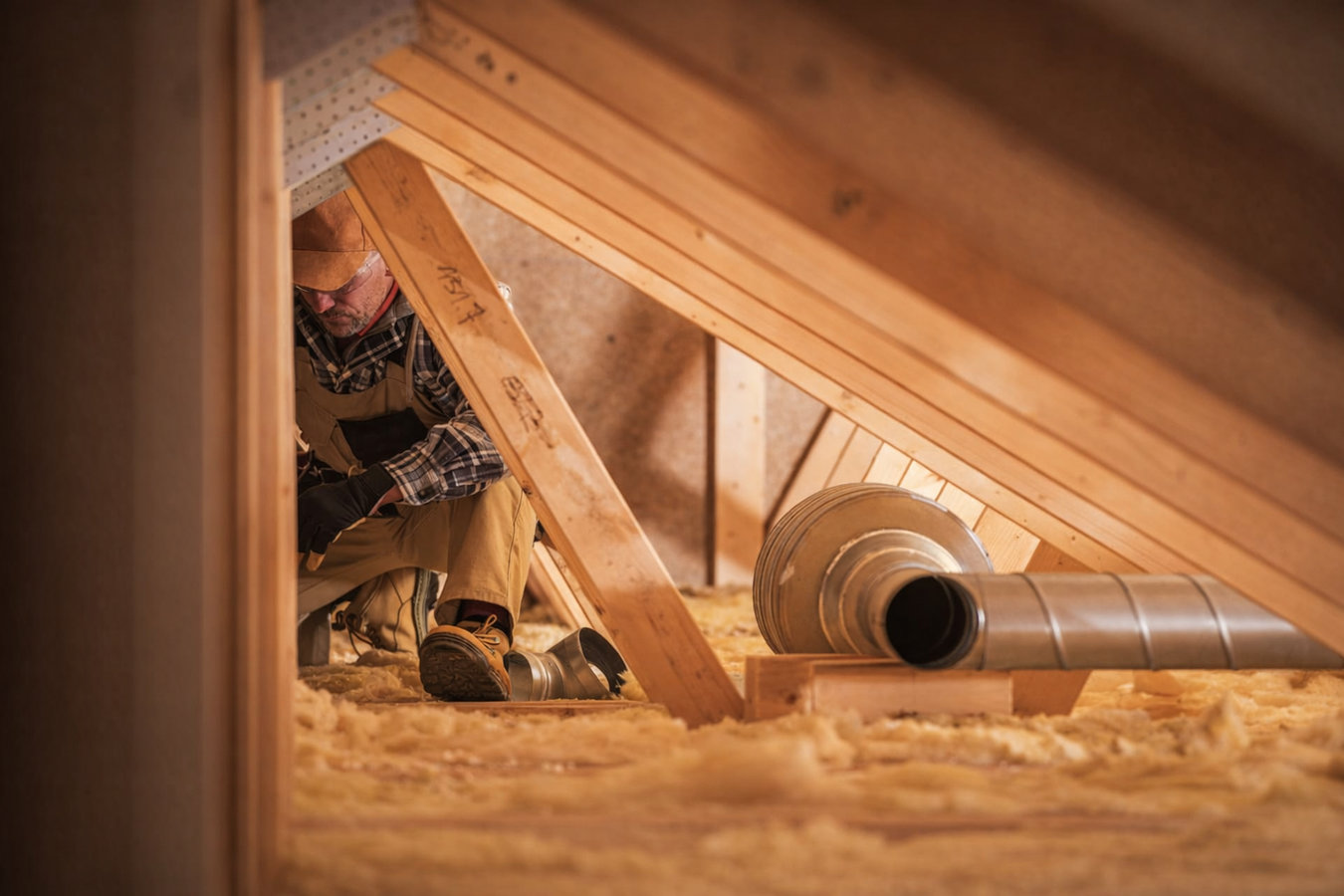
Columbia Insulation serves Sedalia with home insulation, attic upgrades, and crawl space services tailored to Pettis County homes. We are locally owned, offer free estimates, and respond within one business day - whether your home is a brick foursquare near downtown or a ranch-style build on the south side of town.
Sedalia has one of the most varied housing stocks in central Missouri, ranging from pre-war brick foursquares and craftsman bungalows near downtown to ranch-style homes built in the 1960s and 1970s on the city's outer streets. A whole-home insulation plan in Sedalia means assessing the attic, crawl space, rim joists, and walls separately - not applying one product to every area. Learn more about home insulation services and how we build a plan around what the home actually needs.
Sedalia winters are cold enough to freeze the ground solid, and a poorly insulated attic is where most of that heat escapes. Many homes in the older neighborhoods near downtown have original attic insulation that has compressed to a fraction of its intended depth after 50 or more years. Replacing or supplementing attic insulation is the most impactful single upgrade for reducing heating costs in a Sedalia home.
Sedalia's clay-heavy soil retains moisture and releases it slowly through wet seasons, which means crawl spaces under older homes deal with persistent dampness from below. An uninsulated or degraded crawl space allows that moisture to migrate into floor systems and framing over time. Properly insulated and sealed crawl spaces are one of the most durable ways to protect a Sedalia home from long-term moisture damage.
Many Sedalia homes on the south and west sides of town have crawl spaces where ground moisture has never been properly addressed. A vapor barrier installed at the crawl space floor, combined with wall insulation, creates a controlled environment that prevents wood rot, mold, and moisture-related structural damage. Homes near lower-lying streets in Sedalia benefit especially from this kind of moisture management.
Sedalia's older homes often have attic spaces with irregular framing, low clearance, or obstructions that make batt insulation difficult to install correctly. Blown-in cellulose or fiberglass fills those spaces evenly without gaps, which is important in attics where every uninsulated pocket is a path for heat loss. It is also one of the faster installation methods, which matters when a Sedalia homeowner is preparing for a cold stretch ahead.
Sedalia's pre-war homes and postwar ranches alike have accumulated decades of air leakage paths - around plumbing stack penetrations, at the tops of partition walls, and at attic access hatches. Adding insulation without sealing those gaps first is like insulating over a screen door. Air sealing as a first step ensures that the insulation installed afterward is working at its full rated effectiveness.
Sedalia sits roughly halfway between Kansas City and Columbia along US-50, in a part of Missouri that gets cold winters with regular hard freezes and hot, humid summers with severe thunderstorm seasons. That climate range - from below-zero wind chills in January to 95-degree humidity in July - means insulation in Sedalia has to perform in both directions. An attic that leaks heat in winter also allows summer heat to bake down into the living space; the same fix addresses both problems.
A significant portion of Sedalia's housing stock was built before 1960, and many of those homes have never had a meaningful energy upgrade. The brick foursquares and craftsman bungalows near downtown were built to early-1900s standards, and their original insulation - where any was installed at all - is long past its useful life. Post-war ranch homes on the outer streets are now 50 to 70 years old and face their own set of deferred maintenance issues around crawl spaces and attics.
Clay-heavy soil throughout Pettis County expands when wet and contracts when dry, creating ongoing movement that affects foundations, drainage, and the moisture environment under older homes. Spring flooding is a recurring issue in Sedalia's lower-lying neighborhoods, and crawl spaces that are not properly insulated and sealed are vulnerable to water intrusion every wet season. Choosing the right insulation material - one that controls rather than absorbs moisture - is a decision that requires knowing this specific soil and drainage context.
Columbia Insulation works regularly in Sedalia, coordinating permits through the City of Sedalia and handling homes across the full range of Pettis County's housing stock. The older neighborhoods near downtown - brick foursquares and two-story homes on tight in-town lots - present different access and material challenges than the ranch-style homes farther out, and we encounter both regularly.
Sedalia is a working town with stable, long-term homeowners. Residents near the Missouri State Fairgrounds on the north side of town and in the established neighborhoods closer to downtown tend to have homes that have been in the same family for decades - which means they often have original materials that have never been touched. That is a pattern we see consistently in Sedalia and plan for in every assessment.
Sedalia is about 55 miles southwest of Columbia on US-50, and we schedule Sedalia jobs regularly alongside our broader mid-Missouri work. Homeowners in Warrensburg, about 25 miles east of Sedalia on US-50, face similar housing stock and climate conditions, and we serve that corridor regularly.
Reach us by phone or through the contact form and we respond within one business day. We schedule Sedalia assessments throughout the week and do not require you to wait for a specific service window.
A crew member visits your Sedalia home, inspects the attic, crawl space, and foundation, and provides a written estimate at no charge. Pricing is discussed at this visit - not over the phone before we have seen the actual conditions.
Most Sedalia insulation jobs are completed in a single day. Our crew handles material staging, installation, and cleanup - you do not need to be home for exterior-access work, but we confirm access requirements ahead of time.
We walk through the completed work with you before we leave and answer any questions about what was installed and why. If a permit was required, we handle the closeout inspection with the city.
No pressure, no obligation. We assess your Sedalia home, explain what we find, and give you a written price before any work begins.
(573) 530-1593Sedalia is a city of about 21,000 people and the county seat of Pettis County, located along US-50 roughly halfway between Kansas City and Columbia. It is best known outside the region as the birthplace of ragtime music and the home of the Missouri State Fair, held on the permanent fairgrounds on the north side of town every August since 1901. State Fair Community College and Kraft Heinz are among the city's largest employers, and the community has a stable mix of long-term residents and working families.
Sedalia's neighborhoods reflect its history. The older streets near downtown and around the historic district are lined with brick foursquares, Victorian-era homes, and craftsman bungalows - many of them a century old or more. Moving outward from downtown, the housing transitions to postwar ranch homes and split-levels built between the 1950s and 1980s. On the edge of town and into the surrounding Pettis County area, properties get larger and more rural in character. Learn more about Sedalia's history and community.
Contractors working in Sedalia serve a city where most homeowners have been in their homes for a long time and have a practical, get-it-done attitude about maintenance. The nearest comparable service hub to the east is Columbia, about 55 miles away - which is why having a contractor who makes regular trips to Sedalia, rather than treating it as an edge-of-range service call, matters for response time and follow-up.
High-performance foam that seals and insulates in a single application.
Learn moreDense, moisture-resistant foam ideal for walls, roofs, and crawl spaces.
Learn moreBlock ground moisture from entering your home through the crawl space.
Learn moreProfessional vapor barrier installation to control moisture in any space.
Learn moreCommercial-grade insulation for offices, warehouses, and retail spaces.
Learn moreServing these cities and communities.
Contact Columbia Insulation today for a free assessment - Sedalia jobs are scheduled weekly and we respond within one business day.