
Loading...
Serving Columbia, MO and surrounding areas. (573) 530-1593
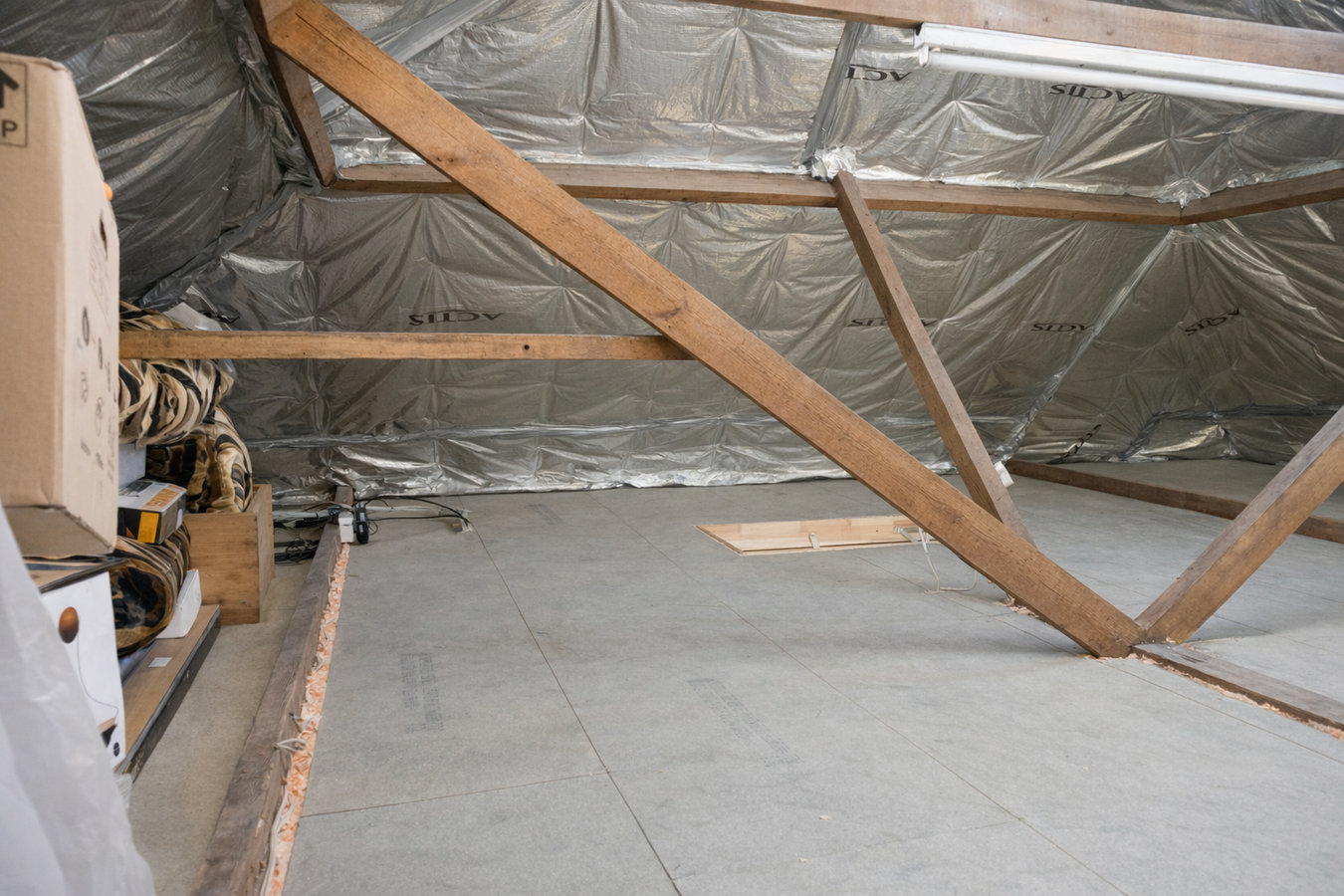
Columbia Insulation serves Moberly and Randolph County with attic insulation, crawl space insulation, and blown-in upgrades for the Magic City's older homes. We respond within one business day and provide written estimates before work starts.
Moberly's winters are cold enough to freeze the ground to significant depth, and attic insulation is the single biggest factor in how well a home holds heat when temperatures drop. Many of the older two-story and bungalow homes throughout Randolph County have original attic insulation that has compressed over decades and no longer meets current R-value standards. Read more about attic insulation to understand what the right depth looks like for this climate.
Blown-in cellulose or fiberglass is the most practical way to add insulation to a Moberly attic without disrupting finished ceilings or floors. It installs quickly, covers around existing obstructions, and fills the settled gaps in older insulation that let heat escape. For homes where the goal is straightforward R-value improvement rather than a full air-sealing retrofit, blown-in is often the most cost-effective path.
Moberly's clay-heavy soil holds moisture close to the surface, and crawl spaces under the city's older homes are often uninsulated and subject to ground humidity for the entire warm season. Cold floors in winter, musty odors, and wood rot in the framing above the crawl space are all signs that the crawl space needs insulation and vapor control. Addressing this area protects the structure as much as it improves comfort.
For Moberly homes with significant air leakage as well as low R-values, spray foam addresses both problems in a single application. Closed-cell foam applied to rim joists, crawl space walls, and irregular framing gaps provides a moisture barrier alongside insulation value, making it the right choice for the wetter, colder parts of an older Randolph County home.
Moberly's older wood-frame homes tend to have accumulated air leakage over decades — gaps around plumbing penetrations, electrical boxes that were never sealed, and attic hatches that let warm air pour out in winter. Air sealing done alongside insulation consistently produces better results than adding R-value alone, and it is an essential step in any serious energy upgrade in this climate.
Older Moberly homes with full basements lose heat through uninsulated walls and rim joists all winter long. Insulating the basement walls and sealing the rim joist keeps the lowest level of the house warmer, reduces moisture infiltration from the surrounding clay soil, and takes real load off the heating system during Randolph County's hard freezes.
Moberly sits in north-central Missouri, and the winters here are measurably colder than those in mid-Missouri cities like Columbia or Jefferson City. January lows drop well below freezing, and the frost can penetrate 18 to 24 inches into the ground in a hard winter. The homes built in this climate before energy codes existed — and that describes most of Moberly's housing stock — were designed to shed rain and wind, not to hold conditioned air. That gap between old construction standards and current performance expectations is where most energy loss happens.
The clay-heavy soil throughout Randolph County adds a moisture dimension to the insulation picture that does not exist in every market. Clay expands when wet and contracts when dry, and that movement puts ongoing pressure on foundations and basement walls in older homes. The same soil holds moisture near the surface during wet seasons, feeding humidity directly into crawl spaces. Insulation choices in Moberly need to account for vapor management alongside thermal performance, or the moisture problem just gets worse after the insulation is installed.
Moberly also has a meaningful share of rental properties, particularly in the older neighborhoods closer to downtown. Rental homes accumulate deferred maintenance, and insulation is often among the first things owners skip during tenant turnover. Whether you own the home outright or have long-term plans for it as a rental, the insulation needs in Moberly's pre-1960 housing stock are genuine and worth addressing before small inefficiencies compound into structural moisture problems.
Our crew works throughout Randolph County and coordinates permits with the City of Moberly for jobs that require them. We encounter Moberly's older housing stock regularly: the brick and wood-frame two-stories near downtown, the bungalows on the in-town grid streets, and the ranch homes built on the edges of town in more recent decades. Each era of construction has different insulation characteristics, and we adjust the scope of work based on what we actually find rather than applying the same solution to every house.
Moberly is about 35 miles north of Columbia along U.S. Route 24, and many residents commute south or work locally at institutions like Moberly Area Community College. Homeowners here value contractors who give accurate timelines and complete the job in a single trip when possible. Most insulation jobs in Moberly fit within one day, and we confirm the full scope before we schedule so there are no surprises when we arrive.
We also serve homeowners in Mexico, MO to the west, where the housing profile is similar to Moberly's older neighborhoods. If your home is between these two areas, we can often route your job alongside others in the corridor to keep the schedule efficient.
Call us directly or submit a request online. We follow up within one business day and ask a few questions about your home to prepare for the site visit.
We visit your Moberly home, inspect the attic, crawl space, and basement, and give you a written estimate at no charge. We will walk you through what we found and what it means before discussing any work.
Most Moberly jobs are completed in a single day. We arrive on schedule, handle all material setup and cleanup, and work around your schedule. You do not need to be present throughout the day, just available at the start and end.
After the work is done, we walk you through what was installed and answer any questions. We provide documentation for your records, and if any issue comes up after we leave, you can reach us directly.
Serving all of Randolph County. No charge for the assessment. Most Moberly jobs are completed in one day.
(573) 530-1593Moberly is the county seat of Randolph County and the largest city in north-central Missouri between Columbia and Kirksville. It sits along U.S. Route 24 and has long been known locally as the "Magic City," a nickname that dates to the city's rapid growth after the railroad arrived in the late 1800s. With a population of roughly 13,000, Moberly functions as a regional hub for the surrounding rural communities in Randolph and neighboring counties.
The housing stock in Moberly is predominantly older single-family homes on the city's grid-style streets. The neighborhoods nearest to downtown and Rothwell Park have the highest concentration of pre-1960 brick and wood-frame homes. On the city's edges, ranch-style and newer two-story construction from the 1980s and 1990s represents a different set of insulation needs than the older in-town stock. Mature trees throughout the established neighborhoods are part of the character of the city, though they also contribute to debris on roofs and gutters and shade conditions that can create moisture issues in crawl spaces on north-facing lots.
Moberly Area Community College anchors the local economy alongside manufacturing and light industry that has been part of the city's history for generations. Residents here tend to be long-term homeowners who invest in their properties over time. We also serve homeowners in Mexico, MO, which shares many of the same older housing characteristics as Moberly's established neighborhoods.
High-performance foam that seals and insulates in a single application.
Learn moreDense, moisture-resistant foam ideal for walls, roofs, and crawl spaces.
Learn moreBlock ground moisture from entering your home through the crawl space.
Learn moreProfessional vapor barrier installation to control moisture in any space.
Learn moreCommercial-grade insulation for offices, warehouses, and retail spaces.
Learn moreServing these cities and communities.
Most homes in the Magic City are losing more heat than they should. Find out exactly where your home stands with a free on-site assessment from Columbia Insulation.