
Loading...
Serving Columbia, MO and surrounding areas. (573) 530-1593
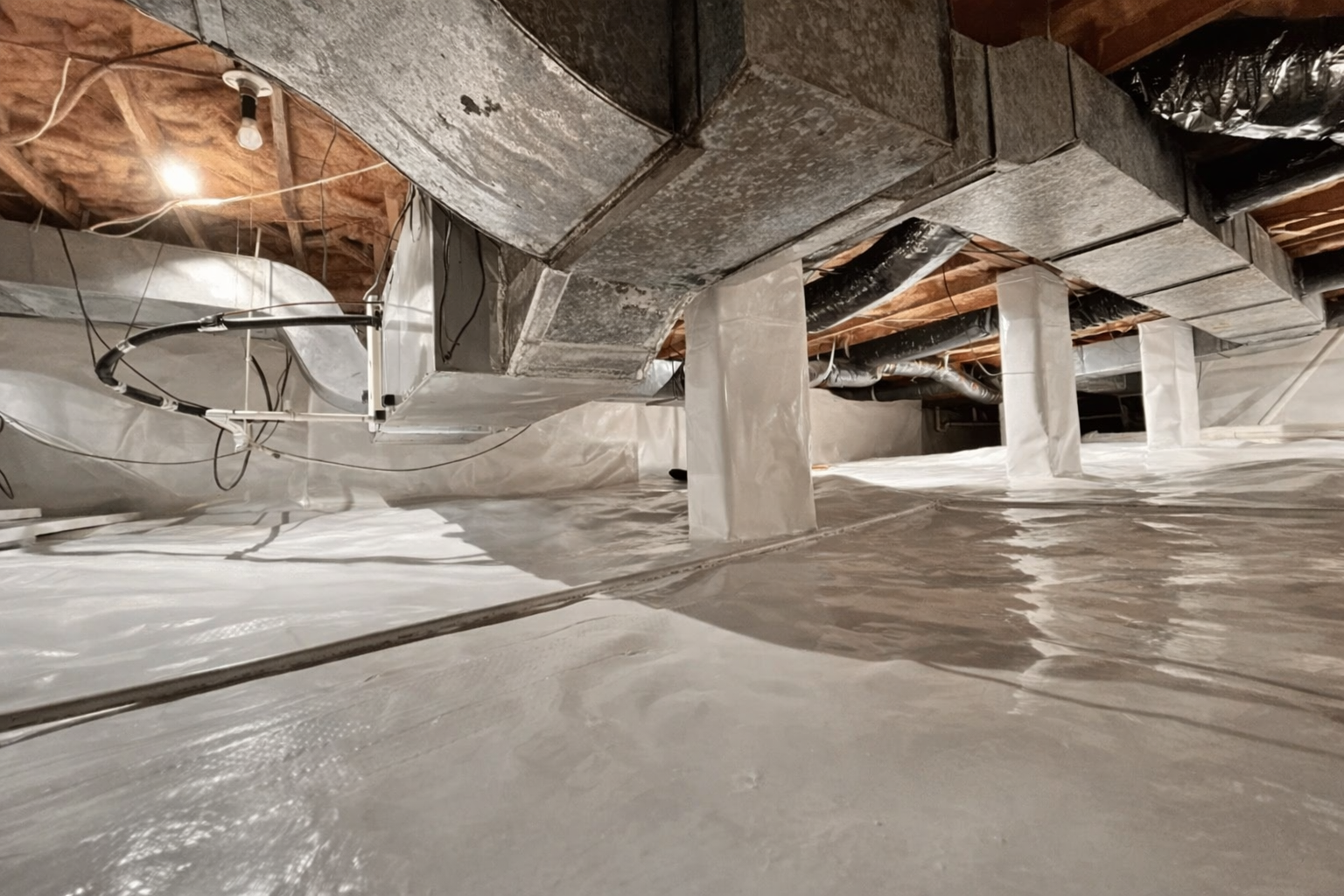
Columbia Insulation installs crawl space vapor barriers that stop ground moisture before it reaches your floors, your framing, and your air. Free on-site estimates with no pressure.
Crawl space vapor barrier installation in Columbia, MO blocks moisture from the soil beneath your home from rising into your floor joists, subfloor, and living spaces. Most jobs take one to two days and require no disruption to your daily routine, since the crew works entirely underneath the house.
Columbia homes sit on clay-heavy Boone County soil that stays wet for days after rain, pushing ground moisture upward year-round. A vapor barrier is a thick plastic sheet laid across the bare dirt crawl space floor, overlapped at the seams, and secured to the foundation walls so moisture cannot sneak in around the edges. Without it, that ground moisture migrates into wood framing, encourages mold, and forces your HVAC system to work harder against humidity it should never have to fight.
If your crawl space already has insulation that is sagging or deteriorating, pairing the vapor barrier with crawl space insulation work gives you complete moisture and thermal protection in a single project.
A damp, earthy odor that appears after Columbia's spring rains or during humid summer months is one of the most reliable early warning signs of ground moisture in the crawl space. That smell is evaporating soil moisture traveling up through gaps in your floor into your living areas. It is not a cosmetic problem, and air fresheners will not fix it.
When wood subfloor absorbs moisture over months or years, it swells and softens. Certain spots feeling slightly springy underfoot, or hardwood planks beginning to cup at the edges, indicate that moisture has been present long enough to affect the structure. In Columbia's older housing stock, where subfloor wood may already be aging, this damage can progress quickly once moisture finds a foothold.
Water droplets on metal pipes or the underside of the floor when you look into your crawl space mean the air down there is saturated with moisture. This is common in Columbia during late spring and early summer when warm humid air meets cooler underground surfaces. That condensation feeds mold growth and accelerates rust and rot on anything metal it touches.
A wet crawl space makes your home harder to condition because moisture in the air requires more energy to heat and cool. If your utility bills have increased without a clear cause, such as a new appliance or a rate increase, moisture intrusion under the floor is worth investigating. Columbia's hot, humid summers put extra strain on air conditioning systems already working against ground moisture.
Columbia Insulation installs crawl space vapor barriers using heavy-duty polyethylene sheeting thick enough to survive future maintenance visits and the sustained moisture pressure that Boone County soil creates. Every installation covers the entire dirt floor, with seams overlapped and taped and the edges fastened to the foundation walls. A barrier with gaps or loose edges defeats its own purpose, and we do not cut corners on either.
For homes where the crawl space also needs thermal protection, we pair the vapor barrier with a full crawl space insulation installation on the walls and floor joists. When the project is part of a whole-home moisture management plan, we can also connect it to a broader vapor barrier installation scope that includes basement walls and other below-grade surfaces. Every job starts with a crawl space assessment so you know exactly what you are getting and why.
The U.S. Department of Energy identifies crawl space moisture control as one of the most cost-effective home improvements for homeowners in mixed-humid climates. Columbia sits squarely in that climate zone, which is why this work pays back faster here than in drier parts of the country.
Homes with bare dirt crawl space floors, musty odors, or floors that feel soft in certain areas.
Homes in low-lying areas, near creek corridors, or with a history of standing water after spring storms.
Homes that need both moisture protection and improved thermal performance in a single project.
Homes where thin or degraded plastic was installed years ago and is no longer providing effective protection.
Columbia's humid continental climate means the soil under your home stays wet for much of the year. Summers bring high humidity that evaporates moisture upward through bare dirt crawl space floors, and winters bring freeze-thaw cycles that shift the ground and can create new entry points for water. Homeowners in neighborhoods near Hinkson Creek and other low-lying drainage corridors face even more intense moisture pressure after spring storms.
A large share of Columbia's housing stock was built in the 1950s through 1970s, when crawl space moisture control was minimal or nonexistent. Many homes from that era were built with vented crawl spaces and either no vapor barrier or a thin sheet of plastic that has long since torn and degraded. If your home is more than 30 to 40 years old and you have never had the crawl space inspected, there is a reasonable chance it has no effective moisture protection in place today. The EPA notes that moisture entering from the ground is one of the primary drivers of mold growth in residential buildings.
We serve Columbia and the surrounding region. Homeowners in Jefferson City, Fulton, and Sedalia face the same clay soil and seasonal moisture conditions as Columbia, and we apply the same installation standards at every job regardless of location.
Call or submit a contact form and we respond within 1 business day. We ask a few basic questions about your home and schedule a free on-site estimate. You do not need technical knowledge before this call.
We access your crawl space through the interior hatch or exterior panel and check the size, existing moisture conditions, any old plastic, and how easy it is to move around. You get a clear explanation of what we find and a written quote.
The crew clears debris and any old barrier material, then lays the new sheeting across the entire floor, overlaps seams by several inches, tapes them securely, and fastens edges to the foundation walls. You can stay home; the work is entirely below your feet.
Before leaving, we walk you through what was done, share photos of the finished crawl space, and note anything else we observed. You receive a written summary of the work completed and any warranty on materials or labor.
Free estimate. No pressure. We respond within 1 business day.
(573) 530-1593We inspect every crawl space before recommending a solution. If there is standing water, mold, or damaged insulation down there, we tell you, because installing a barrier over an existing problem seals the damage in rather than fixing it.
We have worked on homes throughout Boone County and know how Columbia's clay soils and creek drainage patterns affect moisture pressure under homes in different neighborhoods. That local knowledge shapes how we approach each job.
We serve 12 communities in mid-Missouri, from Columbia to Jefferson City to Hannibal. If you own property in multiple locations or are managing a rental near the University of Missouri campus, we can handle the work across your portfolio.
We follow the installation standards established by the insulation industry on every crawl space we work in. That means correct vapor barrier overlap, sealed seams, and materials rated for the conditions under your home.
Every crawl space we work on gets the same thorough installation regardless of size or location. We photograph the finished work and walk you through it before we leave, because a job that looks right to us should also look right to you.
A broader look at vapor barrier options for basements and other areas of your home, beyond the crawl space floor.
Learn moreAdd thermal insulation to your crawl space walls and floor joists after the vapor barrier is in place for maximum performance.
Learn moreColumbia's wet spring season arrives fast. The sooner your crawl space is sealed, the less moisture damage your home absorbs this year. Call or request a free estimate now.