
Loading...
Serving Columbia, MO and surrounding areas(573) 530-1593
Columbia Insulation provides insulation contractor services throughout Boonville, MO, including crawl space insulation, attic insulation, and vapor barrier installation for Cooper County homes. Serving Boonville and surrounding communities since 2022, with free on-site estimates and replies within 1 business day.
Each service below is available to Boonville and Cooper County homeowners. The linked card goes to the full service page.
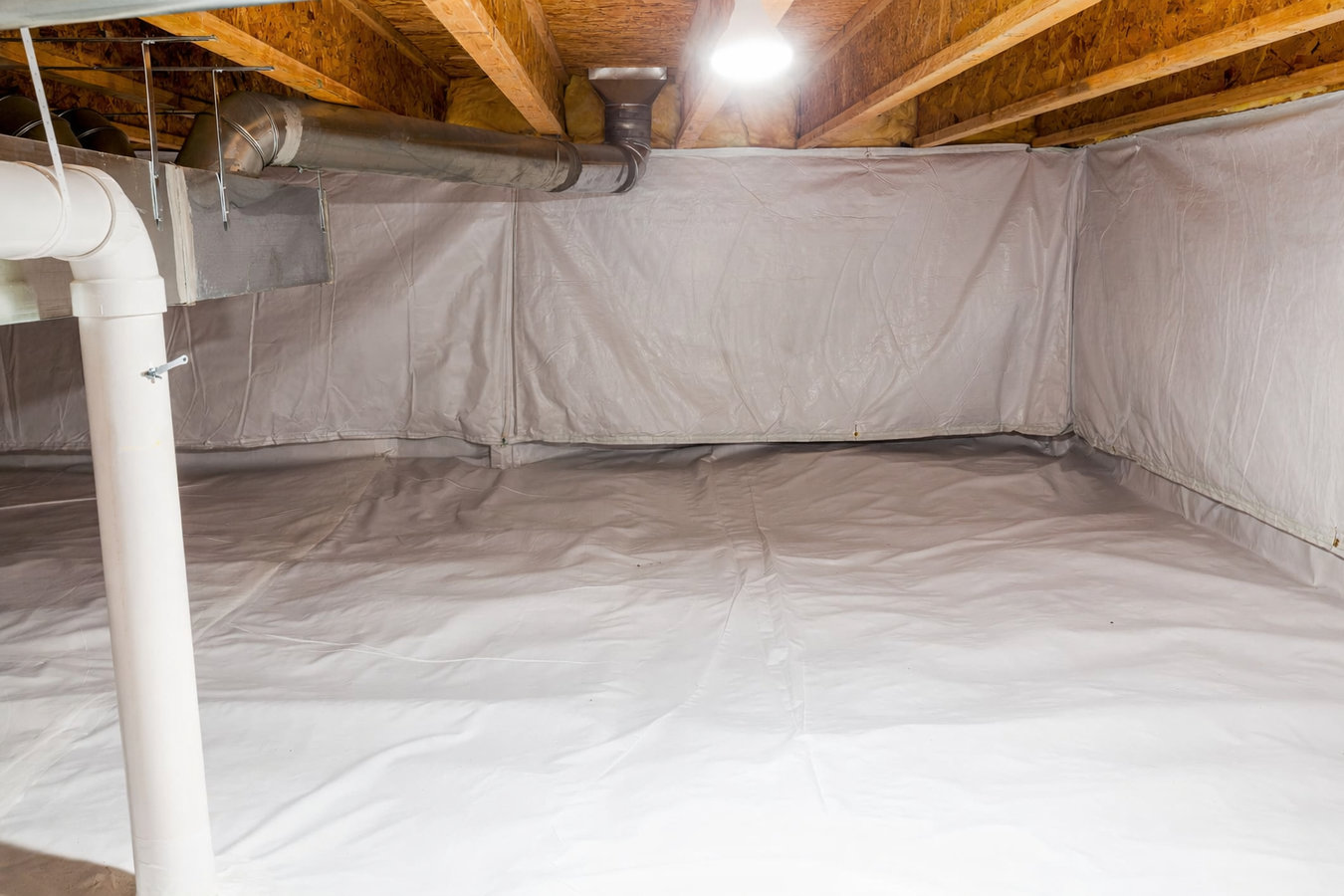
Boonville's location along the Missouri River creates persistent soil moisture conditions that drive vapor into crawl spaces year-round. Many of the older homes in Cooper County — particularly those near the historic districts along Main Street and Morgan Street — have open or vented crawl spaces with minimal or failed insulation. Sealing the foundation walls and floor, then insulating, stops the moisture and cold-floor problem together.
Cooper County's mix of pre-war homes, mid-century construction, and renovated historic structures means attic insulation levels vary widely from one block to the next in Boonville. IECC Zone 4A requires a minimum R-49 in attics, and a significant share of older Boonville homes are well below that mark. An attic upgrade to current standards is typically the highest-return insulation investment for a Cooper County homeowner.
A crawl space without a properly installed vapor barrier is one that keeps re-introducing moisture into the floor framing regardless of what insulation is above it. In a Missouri River community like Boonville, where groundwater and seasonal high-water events are part of the landscape, a heavy-mil liner correctly sealed to the foundation walls is the foundation of any crawl space improvement.
Closed-cell spray foam at crawl space foundation walls and rim joists delivers both insulation and vapor control in a single material — a practical choice for Boonville's older homes where foundation walls are irregular stone or brick and batt or board insulation is difficult to install cleanly. It also adds structural rigidity, which matters in a region with active soil movement near the river corridor.
Blown-in cellulose or fiberglass is the standard retrofit method for Boonville attics, especially in occupied historic homes where ceiling demolition is off the table. Pneumatic installation fills around irregular framing, dormers, and knee walls — the kinds of attic geometries common in the Victorian-era and early 20th-century homes throughout Cooper County's residential neighborhoods.
Boonville homes with full basements — common in older construction throughout Cooper County — often have uninsulated concrete or stone foundation walls that transfer cold directly into the living space in winter. Insulating the basement walls and rim joists keeps the floor above warmer and reduces the heating load on whatever system the home relies on.
Boonville's 400-plus National Register properties across 14 historic districts are not just a tourism asset — they represent a building inventory with insulation conditions that range from marginal to essentially nonexistent. Homes built in the 1840s through the early 1900s were designed without any thermal performance standard beyond the materials at hand. The result is beautiful, well-maintained structures that are genuinely expensive to heat and cool in IECC Climate Zone 4A's dual-season demands.
The Missouri River corridor shapes the moisture problem. Boonville sits at the bend of the river where elevation changes are gradual and groundwater levels can shift with seasonal flow. Crawl spaces in the lower-lying residential blocks absorb that moisture through the soil and through ventilation openings that let summer humidity pour in. By the time a homeowner calls about cold floors or high gas bills, the crawl space insulation that was originally there — if any — has often been compromised by years of moisture exposure.
The city's housing count is relatively modest — roughly 3,400 housing units as of the 2020 census — but a disproportionate share of those are older structures with the specific challenges that come with age: original wood-frame construction with minimal wall insulation, basement or crawl space foundations that were never properly sealed, and attic assemblies that reflect the insulation norms of decades past. Unlike newer suburban subdivisions where all homes share the same construction era, Boonville's neighborhoods have multiple generations of building stock side by side, which means every assessment is its own conversation.
Active homeowners along the Katy Trail corridor and in the neighborhoods surrounding Thespian Hall tend to be engaged property owners who invest in their homes. They are also the ones most likely to be living with energy costs that reflect a building envelope assembled piecemeal over a century or more of ownership changes.
Boonville is about 35 miles west of Columbia on US-40, and the crawl space work we see out here is different from what we encounter closer to Columbia. The older homes near Thespian Hall and along Main Street often have stone or early brick foundation walls — not poured concrete — and the crawl spaces beneath them are irregular in height and footprint. Standard batt insulation doesn't work cleanly in those spaces; spray foam or rigid board cut to fit is the practical answer, and you figure that out by getting under the house, not by estimating from the square footage.
The Katy Trail trailhead at the restored Santa Fe Mission-style depot on Spring Street is a useful landmark for understanding the geography. The residential blocks that spread north and east of the depot and courthouse — along Morgan Street and Ashley Road — contain a mix of late 19th-century and early 20th-century homes that are among the most insulation-deficient in Cooper County. We have worked on several houses in that district and consistently find crawl spaces that have never had a complete vapor barrier installation.
We also regularly work in Jefferson City, MO to the east, where the housing stock shifts toward mid-century state government-era construction with its own insulation patterns. Both communities share the same Missouri River climate conditions, but the building details require different solutions. Homeowners in either area can reach us through the same number.
Reach us by phone at (573) 530-1593 or use the estimate form on this page. We reply within 1 business day to schedule your Boonville visit.
A technician comes to your Boonville home to inspect the crawl space, measure insulation depth, identify vapor and moisture issues, and check the attic. The written estimate is itemized with no obligation — we address cost questions at this step, not after the work is done.
Our crew arrives with all materials and equipment. Most Boonville crawl space projects are completed in one to two days. You do not need to vacate the home unless spray foam is part of the scope.
Before leaving, we walk through all completed work with you, confirm liner coverage and insulation depth, and provide written documentation — helpful for any insurance records, future resale, or permit closeout.
We reply within 1 business day to all Boonville and Cooper County requests. The on-site assessment is free, written with no obligation, and covers your crawl space, attic, and any other areas of concern before we quote a dollar figure.
(573) 530-1593Boonville is the county seat of Cooper County, formally platted in 1817 on the south bank of the Missouri River. It takes its name from Nathan and Daniel Morgan Boone, sons of frontier figure Daniel Boone, who operated a salt-lick operation nearby in the early 1800s. The city of about 8,000 residents sits within the Columbia metropolitan statistical area, approximately 35 miles west of Columbia, and its position at a bend in the Missouri River has defined everything from its Civil War significance to its modern outdoor recreation identity.
The built environment is what makes Boonville genuinely unusual for a city of its size. More than 400 buildings across 14 separate historic districts are listed on the National Register of Historic Places — a concentration of 19th-century commercial, civic, and residential architecture that is exceptional in the region. Thespian Hall at 522 Main Street, built in 1855 and claimed to be the oldest continuously operating theater west of the Allegheny Mountains, anchors the downtown district. The Old Cooper County Jail, built in 1848 and in use until 1979, remains open for tours and is cited as Missouri's longest-serving jail.
The Katy Trail runs through Boonville, with one of its 26 official trailheads located at the restored Santa Fe Mission-style depot that now houses the Boonville Chamber of Commerce. Warm Springs Ranch, the official Anheuser-Busch Budweiser Clydesdale breeding facility, sits on 300-plus acres south of the river and draws visitors from across the state. Seasonal events including the Big Muddy Folk Festival each April and the Festival of the Leaves in fall reflect a community actively invested in its historic character and quality of life. The mix of heritage property owners, active outdoor enthusiasts, and working-class Cooper County households makes up the base of homeowners we serve here.
We also cover Jefferson City, MO to the east along the river corridor, where state government construction eras produced a different but equally aging housing inventory. Both communities share the same river-influenced moisture conditions and the same IECC Zone 4A climate requirements.
Expands on contact to seal every gap and cavity, delivering a superior air barrier and high R-value in attics, walls, and crawl spaces.
Learn moreKeeps conditioned air inside your home by blanketing the attic floor with a deep, code-compliant layer of insulation.
Learn moreLoose-fill fiberglass or cellulose blown into attics and wall cavities for fast, uniform coverage with minimal disruption.
Learn moreWhole-home insulation assessment and installation covering every area of the building envelope from attic to basement.
Learn moreSafe extraction of old, damaged, or contaminated insulation before new material is installed for maximum performance.
Learn moreInsulates the floor system or encapsulates the crawl space to stop moisture, drafts, and heat loss from below.
Learn moreInjection foam and blown-in options fill existing wall cavities without requiring full demolition or siding removal.
Learn moreSeals penetrations, gaps, and bypasses throughout the building envelope to eliminate drafts and reduce energy waste.
Learn moreInsulates rim joists, foundation walls, and basement ceilings to control temperature and prevent moisture issues.
Learn moreDense, rigid spray foam that doubles as a vapor barrier with the highest R-value per inch of any insulation type.
Learn moreLightweight, flexible spray foam ideal for interior walls and attics where sound control and air sealing are priorities.
Learn moreSeals top-plates, penetrations, and bypasses in the attic before insulation is added for maximum thermal performance.
Learn moreHeavy-duty poly sheeting installed across the crawl space floor to block ground moisture and protect framing.
Learn moreProfessional installation of vapor retarders in walls, floors, and crawl spaces to manage moisture movement.
Learn moreUpgrades insulation in existing homes using low-disruption methods that improve comfort without full renovation.
Learn moreInsulation solutions for commercial buildings, warehouses, and light industrial spaces using code-compliant materials.
Learn moreServing these cities and communities.
Free on-site assessment, written estimate with no obligation, and a 1-business-day reply — call or submit the form to get started in Cooper County.